
Above: In the tradition of Duchamp’s Readymades, Sandrow’s display of various “things” in Glass Cloches: from the hundred “things” unearthed, on these pages are selections pictured per category. Photograph: Hope Sandrow.
observational findings untitled (lay bare)
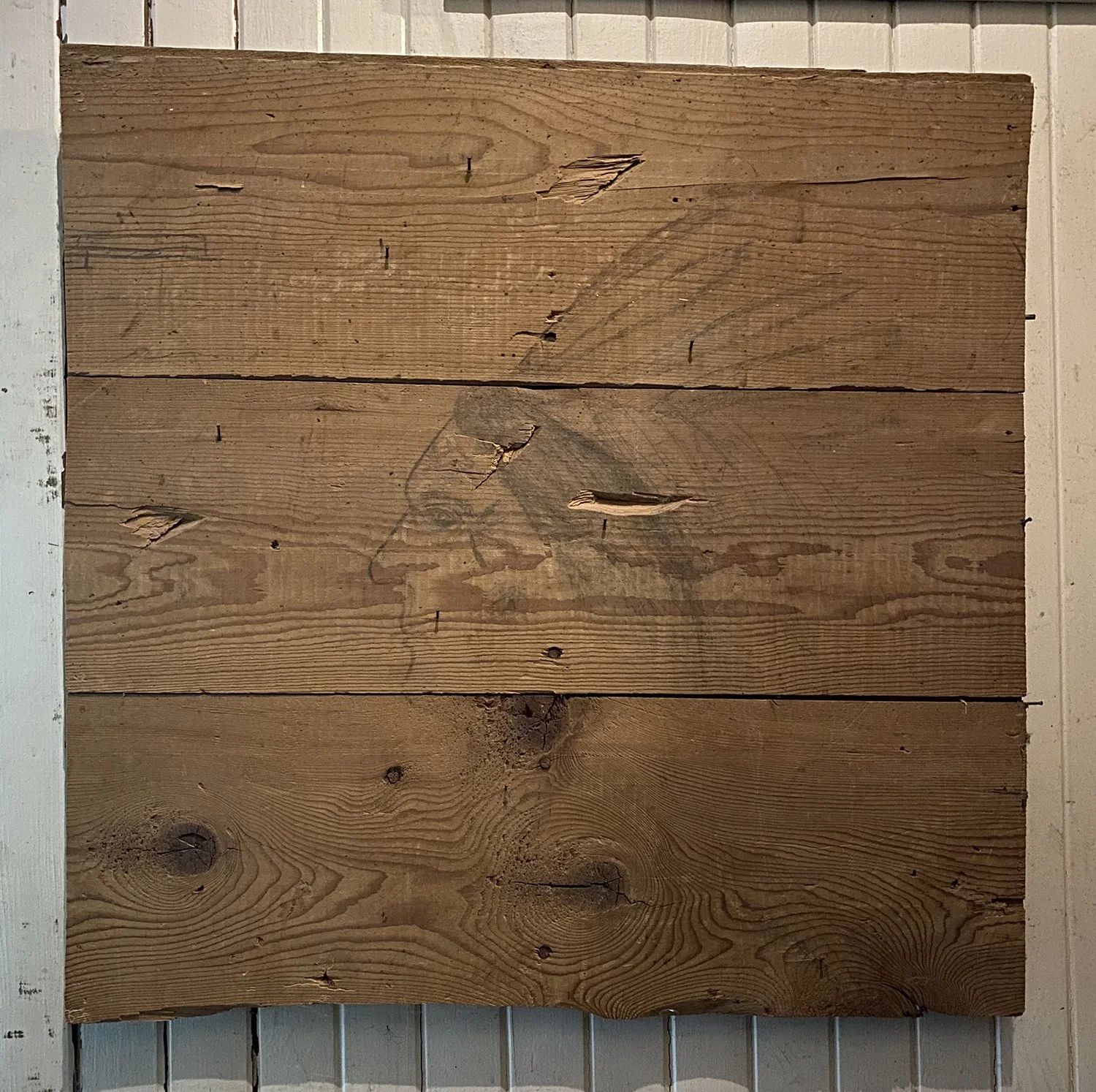
Observational Findings Untitled (lay bare) reveals “things” (Note 1) unearthed in the ground by Sandrow and/or Shinnecock Flock Members (Note 2), and behind walls (pictured left, Graphite Drawing on Wood) relating to the social, cultural and natural history within open air studio Shinnecock Hills spacetime. Sited within the former Colt Estate (1891 - 1946, Note 3) on lands within the Shinnecock Indian Contact Period Village Fort Critical Environmental Area.
The study’s title references the influence of Marcel Duchamp on Sandrow’s art-making. In which the role of chance is a central experience as it was for the artist whose work, including “The Bride Stripped Bare By Her Bachelors aka LARGE GLASS” first engaged Sandrow as a young girl at the Philadelphia Museum of Art. “Duchamp delighted in the fact that the glass shattered while being transported, the jagged cracks further confounding and fragmenting the object's chance encounter with the real world. Rather than offering an escape into a story or environment, the environment is framed and focused by the work of art, and its story is ever subject to change, like the physical state of the artwork itself.” (Note 4)
The (re)found objects reveal lost histories of peoples and places. The randomness of what is found, and, when, juxtaposes the first known inhabitants 14,000 years ago to their descendants of today, The Shinnecock Indian Nation to Colonialist settlers (1640) when only “things” that could not be re-used were “discarded” (preindustrial era). Marking the transition from people making what was needed themselves to buying packaged goods in stores made by others (Industrial Revolution) and electric power during Colt Family ownership. More recently when “landfill” and “trash” compose a global crisis. (Note 5) Exploring sociological and ecological effects of human domination of the natural world in the current geological times of the anthropocene.
The study’s contemporary context also lays bare cultural and societal conflicts since the Town of Southampton laid claim, and seized these Hills (1859) from Shinnecock Indian Nation. Recently (September 2020) Town officials and area property owners, including Sandrow/Skogsbergh, supported The Shinnecock Indian Nation’s demands for protection of their ancestral lands (Note 6).
All photographs © Hope Sandrow.
Scroll down for more findings.
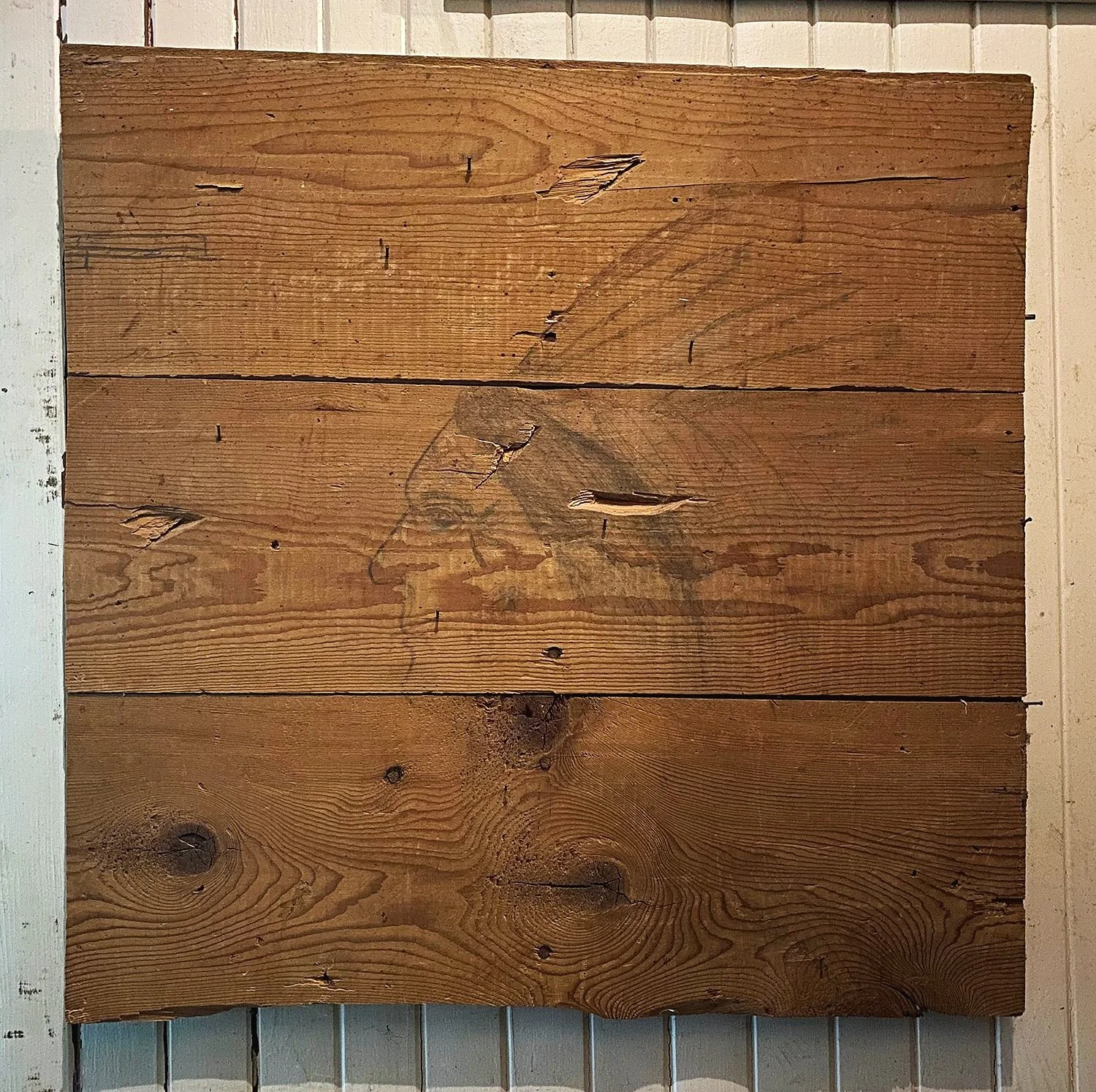
Observational Findings Untitled (lay bare)Anonymous
Graphite Drawing on Wood (Cedar) 1891
(Unsigned) Found, September 27, 2006
26” x 27” x 3/4”
Note 1: Objects one cannot give a specific name to.
Note 2: “They typically peck at the ground in front of them first, then step on top of that spot and scratch the surface underneath. They don’t look at the ground while they’re scratching – they really couldn’t see it anyway because they scratch with their legs positioned under their bodies, rather than extending a leg out to scratch in front of them.
So why do chickens scratch the ground? Chickens scratch the ground to forage for food beneath the surface, for dust bath preparation, nest arrangement, and social interaction. Scratching also helps keep a chicken’s nails short.
Scratching behavior, seemingly so simple, actually plays a complex role in a chicken’s health and social life. It’s one of the fundamental behaviors that makes a chicken a chicken. A good understanding of your chickens’ scratching behavior can even help you to bond with them!” Chicken behaviour, The Featherbrain
Note 3: The Colt Manor House burned to the ground (1951)... see what “remains”.
Note 4: “Looking at Dada” Authors Sarah Ganz Blythe, Edward D. Powers, Cassandra Heliczer, Museum of Modern Art (New York, N.Y.) · 2006 page 14
Note 5: View artworks in Sandrow’s 1989 -1992 series In Response(mounted): the in-disposable garbage documented in her photographs were the result of the Reagan/Bush administration’s elimination of federal regulations.
Note 6: The Town of Southampton passes the first Graves Protection Resolution in New York State. Accompanied by a six-month building moratorium Town Board approves Shinnecock Hills Building Moratorium and Graves Protection Act (September 8, 2020)
observational findings untitled (lay bare) blue and white pottery
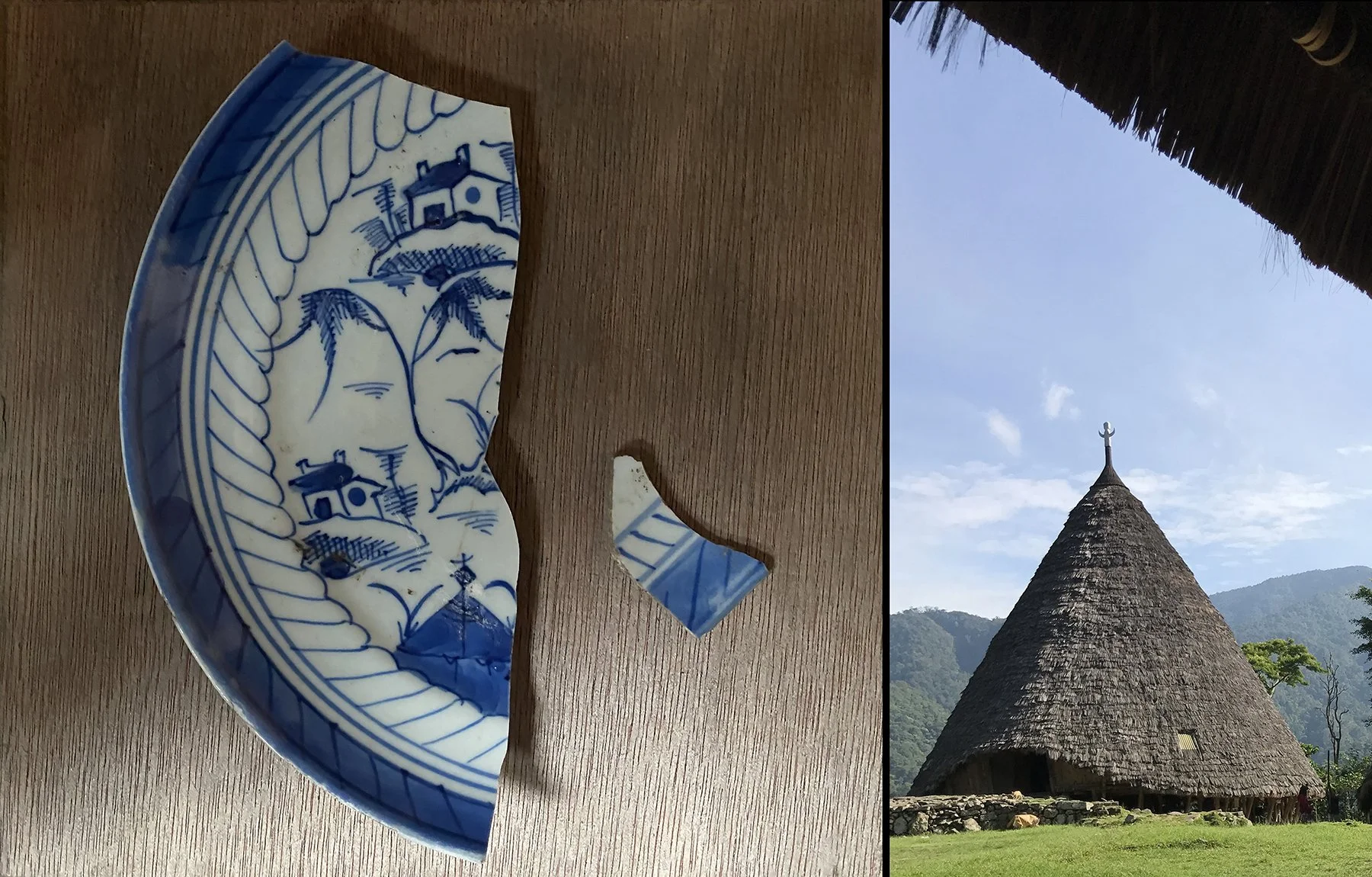
Unearthed by Shinnecock Family Flock Members
Top image:
September 3, 2021, Laid bare by Shinnecock Family Flock, gallus gallus, and where I found them in my open air studio, these pottery fragments picture “scenes” and "cultural objects” - such as the painted roof ornament atop a roundhouse resembling those that I documented in the homes of Mangarrai chiefs in the villages of Waerebo and Todo, on the Island of Flores, Indonesia where I visited in 1998 and again in 2016 during travels for a commission by The U.S. State Department, Art in Embassies for The fabric of time and space open air studio Shinnecock Hills spacetime. (see below)
These shards, identified by Shinnecock Elder, Peter Running Deer Silva, Life Long Traditional Chief of the Hassanamisco Indian Reservation and descendants of the historic Awasamaug Leaders of the Nipmuc Tribal Nation, were transported by Shinnecock Whalers circa, 1891 - 1948.
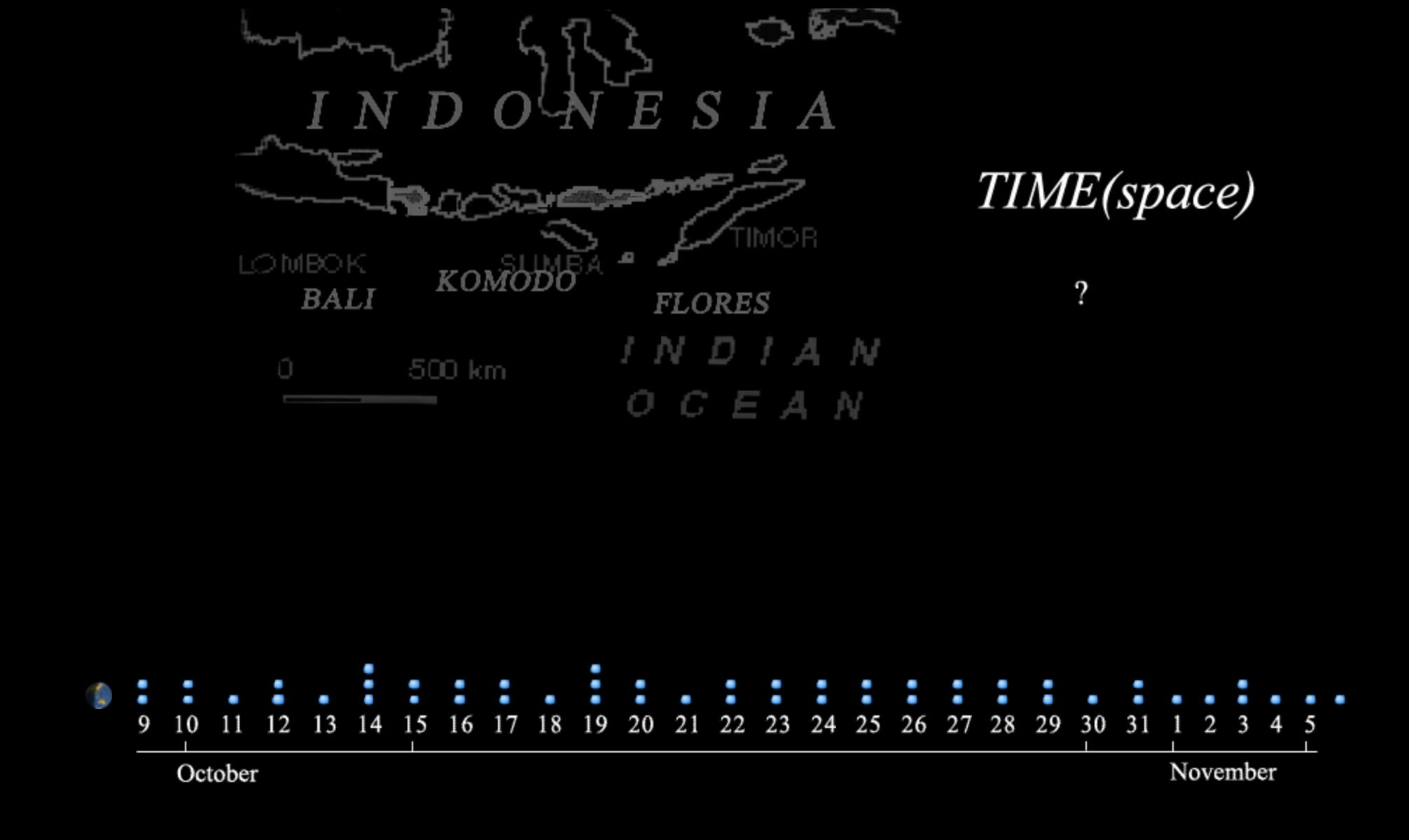
above, TIME(space) the online project commissioned by Andy Grunberg for the Nature Conservancy traveling exhibition, In Response to Place: Place Matters, opening September 2001 at The Corcoran Gallery of Art.
It was by chance and mysterious that I found these antique fragments unearthed by Shinnecock Family Flock members in my open air studio picturing a remote Indigenous culture from the other side of the world, which few others have, nor are familiar with these First Peoples.
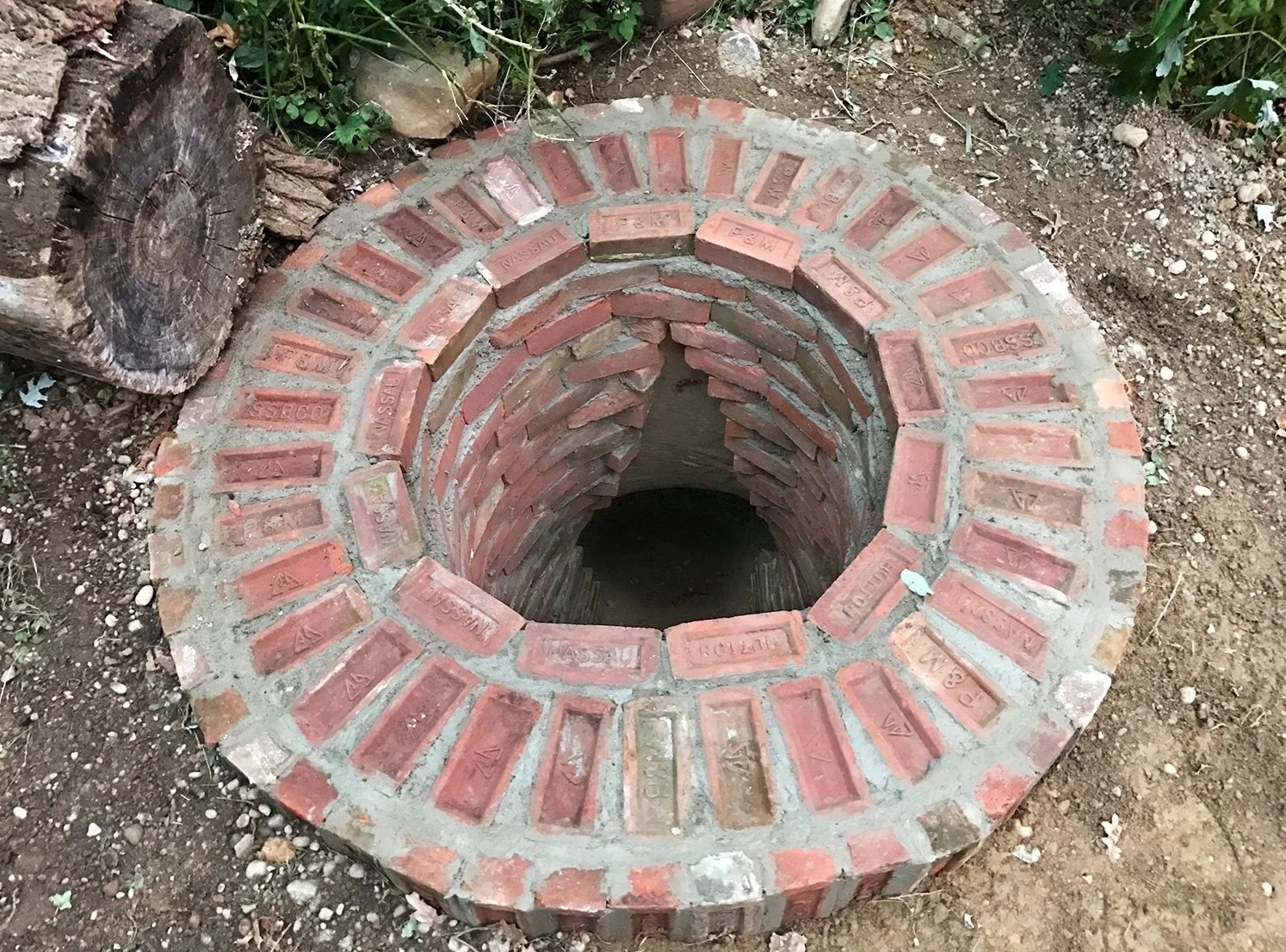
Hope Sandrow Passing to the other side The fabric of time and space open air studio Shinnecock Hills spacetime. 2016 Clay, Brick, Cement 62” x 62” x 76”
l to r, top and underside views:
3-1/2” x 2-5/8” x 1/4” ; 2-1/2” x 2-1/2” 1/8” and 1-1/8” x 1/2” x 1/8”;
1-1/4” x 3/4” x 1/8”; 3-1/8” x 2-1/8” x 3/8”; 7” x 3-1/4” x 3/4”
observational findings untitled (lay bare) quartz crystal
Found at the base of Dorothy Perkin’s Rose Bush, August 1988
open air studio Shinnecock Hills
2-1/2” x 2” x 1”
Observational Findings Untitled (lay bare) Quartz Crystal II
Found (nearby Yellow Jacket nesting hole) with Caterina Verde.
September 3, 2020
3” x 3-1/2” x 3/4”
observational findings untitled (lay bare) coral fragments
Unearthed by Shinnecock Family Flock Members
l to r, top and underneath views:
3” x 2” x 1-1/2”; 5” x 3-3/4” x 2-1/2”
observational findings untitled (lay bare) sea shells
Unearthed by Shinnecock Family Flock Members
l to r, top and underside views: 4-1/4” x 3” x 2-1/2”; 1-1/2” x 2” x 1-1/2”; 1” x 1-1/2” x 1”; 3/4” x 1/16”
observational findings untitled (lay bare) bone
Found on ground nearby White Cockerel March 28, 2006
10-5/8” x 2-1/2” x 2-3/4”
Unearthed by Shinnecock Family Flock Members
(l to r, descending order) 2-3/4” x 2” x 1-5/8”; 1-1/2” x x 1-1/2” x 1-7/8”; 2-1/8” x 1-7/8” x 1-11/16”
observational findings untitled (lay bare) fauna
Unearthed by Shinnecock Family Flock Members
Feather 5-1/4” x 1”; Spine 2-3/4” x 1” x 1/2”; Turtle Shell 2” x 1-3/4” x 1”; Snake Skin 3 -1/2” x 2-1/4” x 3/8”
observational findings untitled (lay bare) iron
Unearthed by Shinnecock Family Flock Members
Hematites aka “Indian Paint Pots”: 1-1/2” x 1” x 3/4”; 1/4” x 3/4” x 1/2”; 1-1/2” x 1” x 1”
Circle (Coin?) 7/8” x 1/8”
observational findings untitled (lay bare) stone / fragment
Unearthed under stone boulders October 1, 2016
8” x 8-1/2” x 2-1/2” ; 4-3/4” x 5-1/2” x 5/8”
Stone/fragment unearthed by Shinnecock Family Flock Members
1-7/8” x 1-3/8” x 1/2”; 2-1/2” x 1-1/2” x 1-3/8”
observational findings untitled (lay bare) stone / figure
Unearthed by Shinnecock Family Flock Members
Striped Torso, 1-1/4 “x 1-1/4” x 3/4”;
Crouched, 3” x 1-1/2” x 1-1/2”
observational findings untitled (lay bare) glass
Clockwise starting upper left: (above and in descending order for mobile version)
Unearthed by Shinnecock Family Flock Member. Carter’s Glass Inkwell (circa 1897), 2-1/2” x 2-1/2”
Found digging a hole for plants. Johann Hoff Malt Extract Health Tonic. July, 1992 7-3/4” x 3” x 3”
Found amongst wild native plants. (below)
Pyrex-Glass Strain Electric Wire Insulator Separator June, 2020 3” x 1”
Crown Embossed Brookfield (aka Bushwick) Glass Company Beehive Telegraph Insulator 4” x 3-1/2”
observational findings untitled (lay bare) wood
Portrait on wood, 15” x 15”;
Unearthed by Shinnecock Family Flock Members:
(top, r) Spool, 1-1/4” x 3/4”; Circle, 1” x 1/8”; Screw, 1-1/2” 1” x 3/8”
observational findings untitled (lay bare) metal
Found digging amongst wild native plants
top, descending order, l to r, top and underside views:
Colt Single Shot Pistol June 2020: 2-1/2” x 12” x 1”; Heart-shaped, June 2020 5” x 6” x 3/8”; Horse Shoes, May 1999, 6” x 4-3/4” x 1/2” ; Knob 2” x 2-1/4” x 1-7/8” April 2020
observational findings untitled (lay bare) ball
Unearthed by Shinnecock Family Flock Members
l to r, top and reverse views: Rubber 3” x 3” x 3” ; Green 2-1/2” x 2-1/4” x 2-1/4”; Golf 1-3/4” x 1-1/2” x 1-5/8”; Tennis 2-1/2” x 2-1/2” x 2-1/2”
observational findings untitled (lay bare) plastic
Unearthed by Shinnecock Family Flock Members
l to r, top and underside views:
35mm Black Film Canister (1974 - ) 2” x 1-1/4”; 1-1/4 ‘ x 1-1/8 ‘ x 7/8”; 2-1/2” x 1” x 3/4”; 1-1/4” x 1-3/8” x 1-1/4”