November 6, 2016 Todo Village of Waerebo, Mangarrai Flores
the fabric of time and space: flores
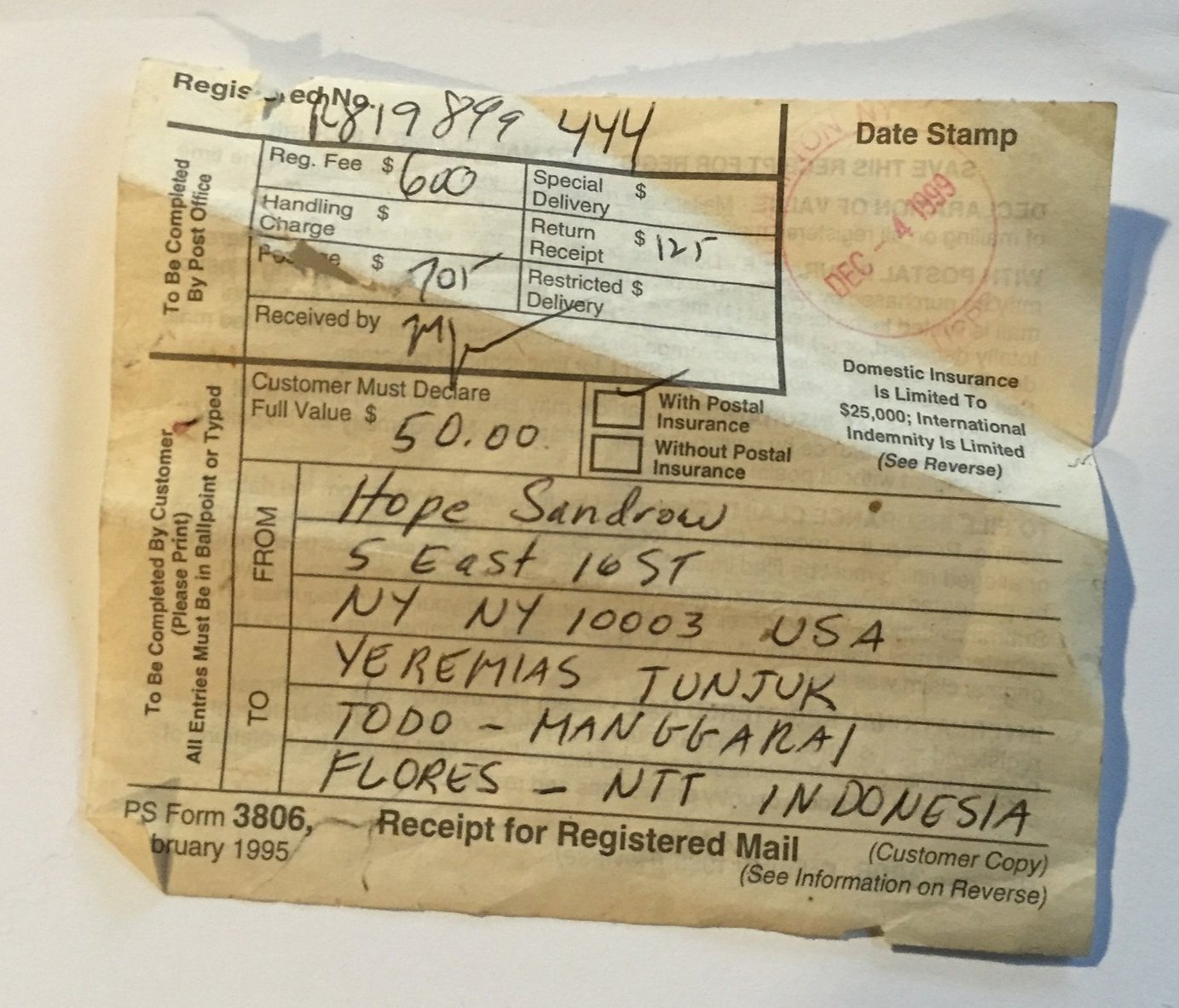
The receipt for the eyeglasses Hope sent in 1999, time(space), now being worn, the reason for their embrace, 2016
Hope Sandrow with Chief Yeremias Tunjuk. Yeremias told me that this “ornament” atop the roundhouse (right) marks the Chief’s roundhouse.
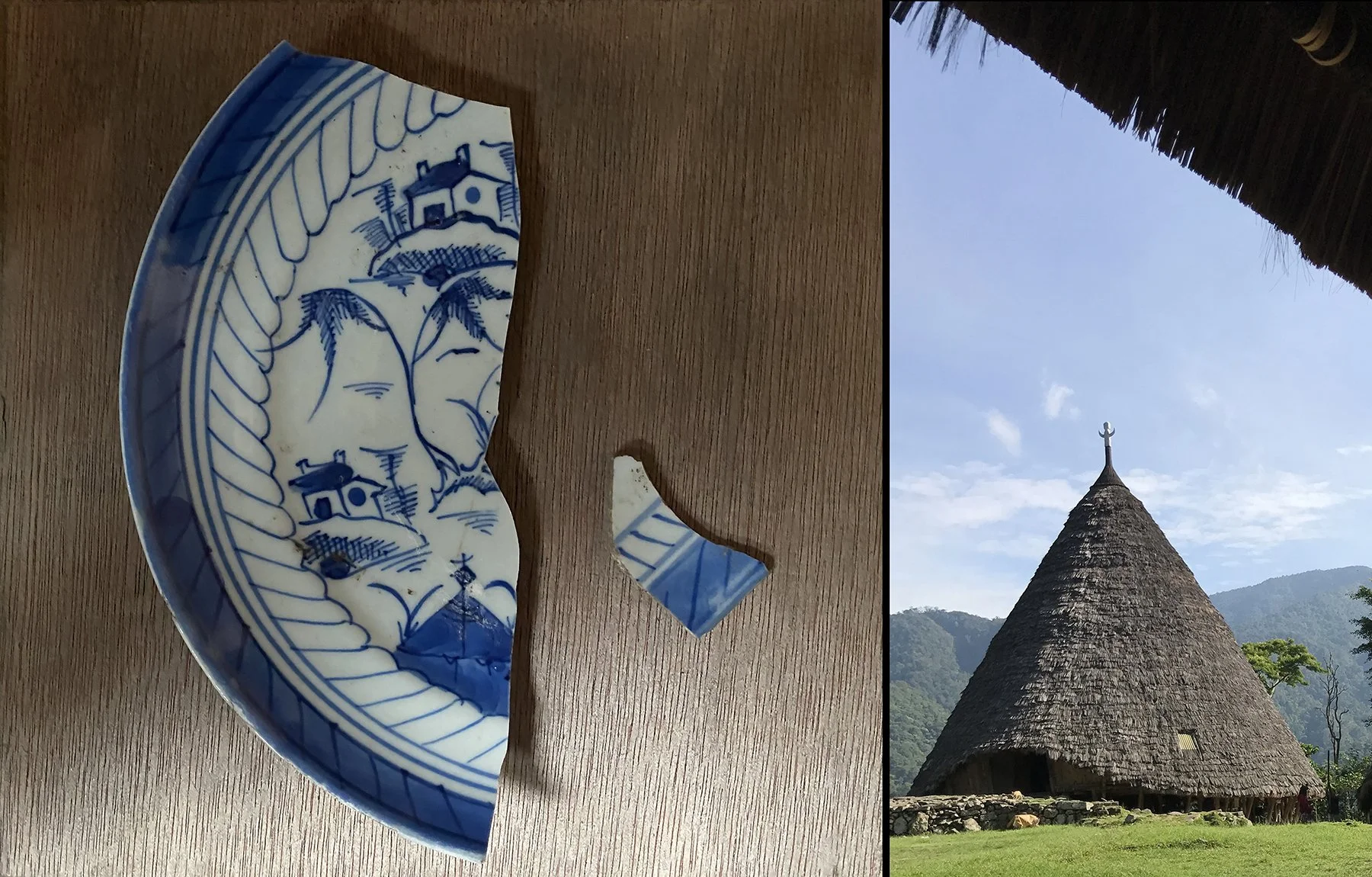
Laid bare by Shinnecock Family Flock, gallus gallus where I found them in my open air studio , September 3, 2021, these pottery fragments depict “scenes” and "cultural objects” - such as the painted roof ornament atop a round-house resembling those pictured here atop the homes of Mangarrai chiefs
Todo Village former Chief, Yeremias Tunjuk wearing the eyeglasses I sent him in front of roundhouses (Nov 6, 2016) in Flores, Indonesia.
My travels for research commissioned by Art in Embassy (2016) for the installation The Fabric of Time and Space. November 6, 2016. Todo Village, Mangarrai Flores
Saturday, November 5, 2016, 7:36 pm
90°. Sun. Following up a 5-hour car ride navigated by Ignes (pictured bottom right, third from left) through tropical rainforests over mountains to the peak. Bhertholemus Pantung, interpreter/ guide (pictured bottom right left and at the village gate) and I pose at the entrance to Moangarria People's Todo Village. I'm wearing a Mangarrai hand-loomed cotton sarong naturally dyed and colored from plants (one of four acquired here in November 1999 as part of the commissioned work of art: time(space). Then the Village Chief YeremiasTunjuk performed customary welcoming ceremonies in the Mbaru niang (drum house with a roof composed of palm fiber, pictured top right). When Vince, our guide/interpreter, translated Yeremias's gestures to my reading glasses as none were available to him on the island. This is why on my return to New York City, I mailed (top left USPS receipt) a dozen over-the-counter-reading glasses. An acknowledgement of a delivery never returned. At the moment of this picture, I don't know if the eyeglasses reached Yeremias. Nor, if the village weavers will accept my invitation to participate in The Fabric of time and space.
A homestay is arranged in the village tonight with Titus and Marie Jegadut. The sarong elicits the delightful response that I hoped for. And wonderment; Titus and Marie, a weaver, recognized the age of the hand-embroidered pattern. It's my turn to be surprised; Yeremias is his brother. and he appears pulling the reading glasses from his shirt pocket (top right). Now 84 years old and no longer Chief, Yeremias welcomes and embraces me saying, he's thrilled by my visit because all these years, he didn't know how to thank me. Our reunion is celebrated with many pictures (bottom left with me in the home of Titus and Marie, and a group portrait, Titus, (right) Marie (next to me), before sharing the festive dinner prepared by Marie.
A rooster foot preserved from a ritual bound with feathers hangs from the ceiling. Titus explains that it's a symbol of Good Fortune. He goes on to say that although the village now has electricity powered from generators, villagers live in western-style homes like his because they cannot afford the costs necessary to maintain traditional lodgings. They answer that they'd be thrilled and honored to participate in The Fabric of time and space. We look at handmade sarongs and scarves. I purchase many in support of their life’s work. Titus explains how traditionally made woven fabrics require a month or more of work, so that artisans like Marie are challenged to continue their artistic practice because tourists favor inexpensive souvenirs. They greatly appreciate my interest, hoping their part in my project will bring much needed attention and appreciation. Treasuring this happy ending, I fall asleep (in a western-style bed).
The length of Visible Light is 13h 10m. Length of day 12h 26m.
Sunrise, Todo Village, 1999
Video of Hope with villagers, 2016. (above)
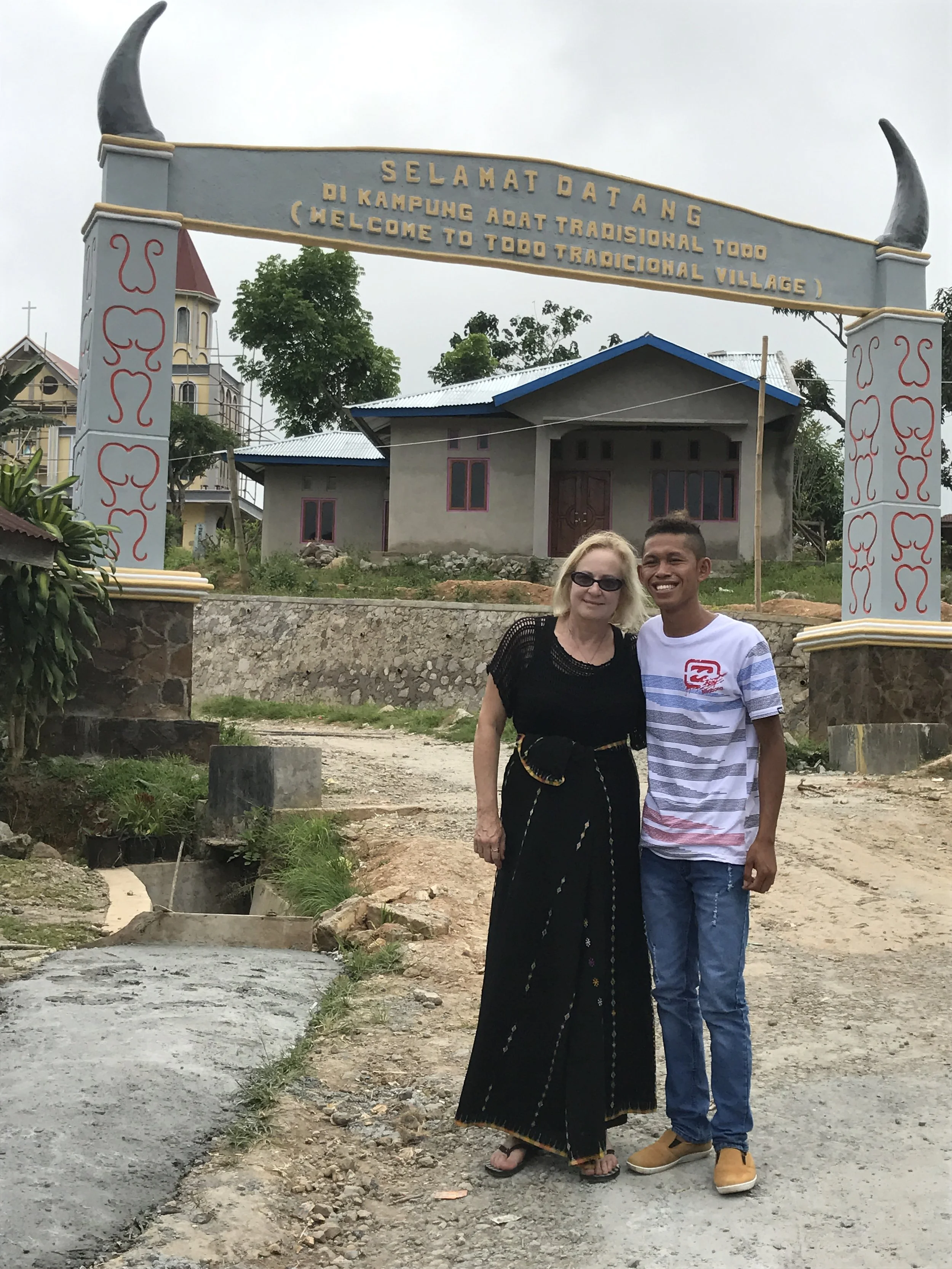
Hope with Bhertholemus Pantung, guide and interpreter, at the village gate. 2016
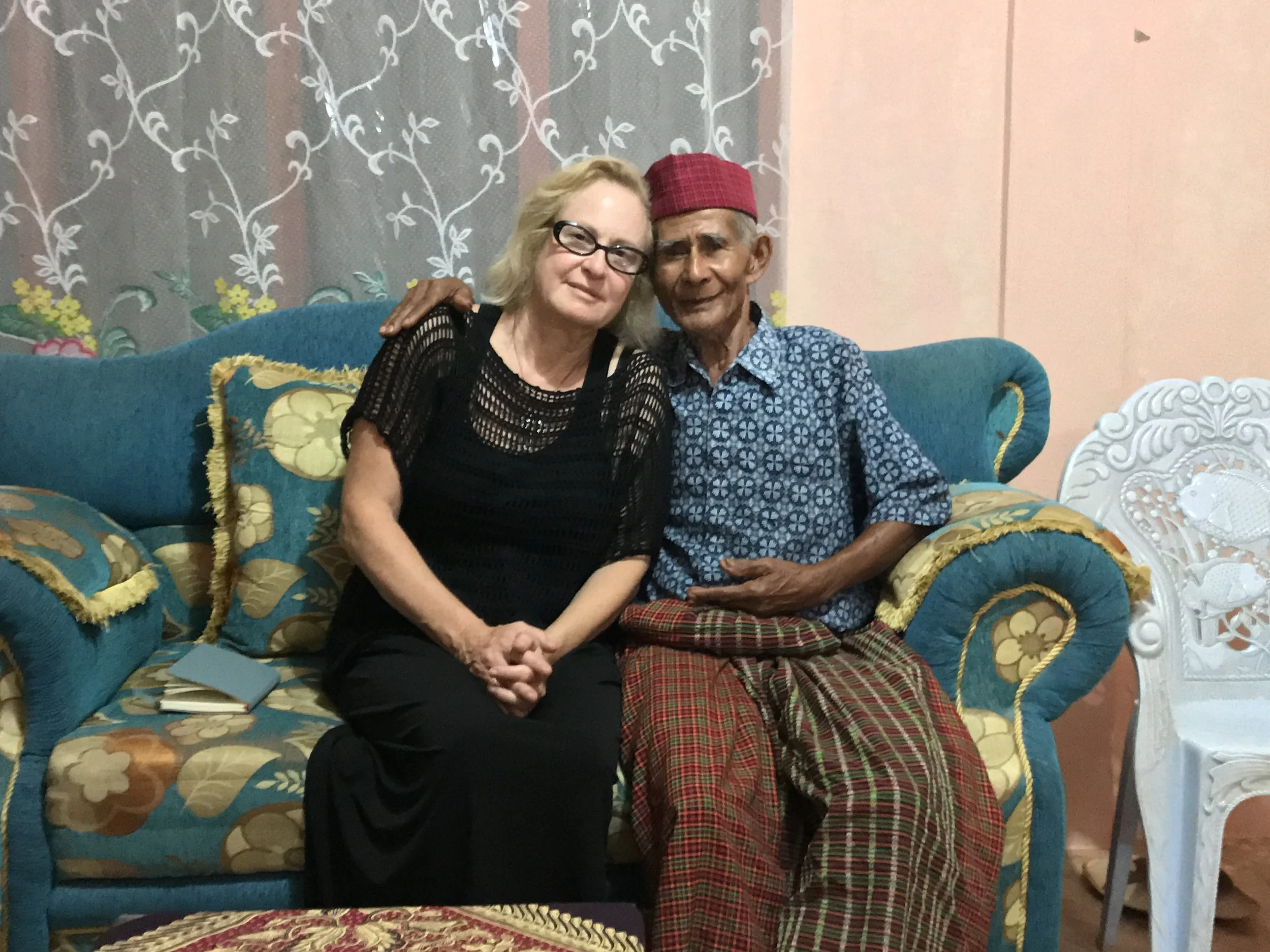
Reunion with Yeremias, former Village Chief. (above) 2016
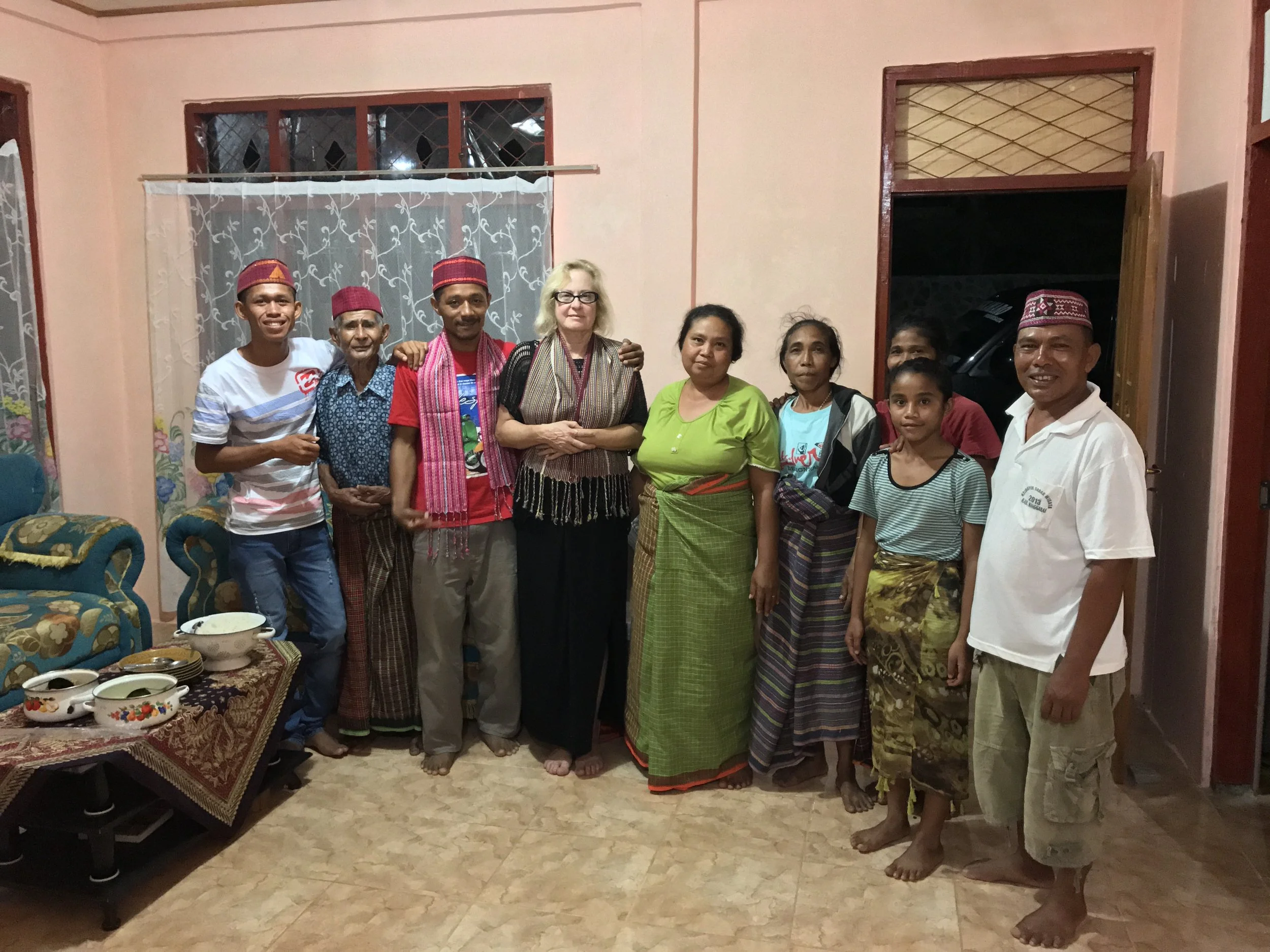
In the home of Titus and Marie, Titus (right) Marie, next to me. 2016
Photos with Hope Sandrow by Jeremy Rhodes Grosvenor. 2016.
The fabric of time and space
1998 commissioned by the Nature Conservancy